Microadventures After Work: 10 Ways to Enjoy a Short Active Break Without a Weekend Trip
A proper change of scene does not have to begin with a packed bag, a long drive or two free days in the diary. A microadventure is deliberately small: an active outing that fits around everyday responsibilities but still breaks the usual work-home routine. For most people, the most practical window is the period between finishing work and going to bed. Two or three hours can be enough for a sunset walk, a cycle ride, a short paddle or another activity close to home. The idea is not to cover an impressive distance or turn every evening into a fitness challenge. It is to use familiar surroundings differently, spend meaningful time outside and return home the same night. The following ten ideas can be adapted to cities, suburbs and rural areas, making them realistic options for weekday evenings throughout the year.
Start with routes that fit into an ordinary evening
1. Take a sunset circuit instead of an ordinary walk. A familiar neighbourhood changes considerably when a route has a clear destination and a time limit. Choose a viewpoint, riverbank, open common, hill, beach or large park that can be reached on foot and aim to arrive shortly before sunset. Rather than walking the shortest way there and back, create a circular route so that most of the journey covers different ground. A useful length for an after-work outing is roughly 60 to 120 minutes, although the distance should suit your normal activity level and the terrain. Bring water, a light outer layer and, when daylight is limited, a torch or head torch. In summer the later sunset can make this one of the easiest microadventures to organise, while in autumn and winter the same idea works as an early-evening walk with good lighting and a shorter route.
2. Travel a short distance from home and walk back. One simple way to make local streets and paths feel less predictable is to take a bus, train or tram for several stops and return entirely on foot. The route does not need to lead through famous scenery. Residential streets, canals, old railway paths, parks, waterfronts and pedestrian routes can create a surprisingly varied journey when approached from the opposite direction to your normal commute. Choose the starting point before leaving work, check that the walking route is legal and suitable, and estimate how long the return will take. This idea is particularly useful for people who struggle to start a walk directly from home because it removes the temptation to shorten the route after ten minutes. Once the journey home has begun, the walk has a natural purpose and a definite end point.
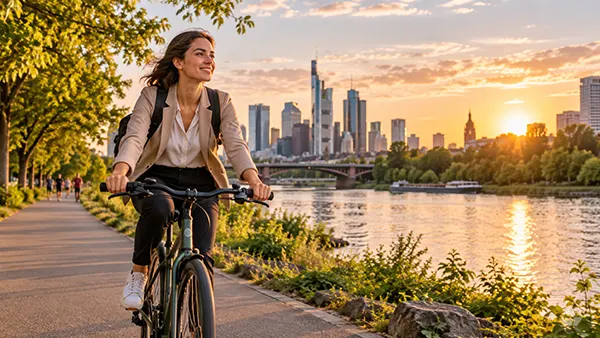
3. Build an after-work cycling loop with no repeated sections. Instead of riding along the same road in both directions, select three or four local points and connect them into a circuit. A river crossing, woodland edge, village, reservoir, coastal promenade or traffic-free path can act as a turning point. For an ordinary weekday, a route that takes about an hour to two hours is often more realistic than chasing distance. Check the bicycle before leaving, especially the tyres and brakes, and use working lights whenever visibility is reduced. Reflective details are useful on mixed routes and road sections. The best evening circuit is not necessarily the longest one; a varied route with quiet stretches and a clear way home usually creates a stronger sense of having gone somewhere than a fast ride along a single familiar road.
Turn familiar terrain into a small challenge
4. Find the highest accessible point close to home. A hill, ridge, long staircase, steep park path or elevated viewpoint gives an ordinary evening walk a simple objective. Search your local map for contours, viewpoints and public paths, then create a route that reaches the high point without requiring a long journey to the start. In a flat city, repeated climbs on a substantial public staircase or a route linking several smaller hills can provide the same sense of progression. There is no need to turn the outing into a hard workout. Walking uphill at a comfortable pace, pausing at the top and returning by another route is enough to change the character of the evening. Wet steps, loose surfaces and poorly lit slopes need extra care, so shortening the route is preferable to pushing on when conditions deteriorate.
5. Follow a canal, river, greenway or old railway path until a fixed turnaround time. Linear routes are particularly convenient after work because navigation is simple and the distance can be adjusted easily. Set a time rather than a mileage target: for example, walk or run away from the starting point for 35 minutes, pause briefly, then return. Towpaths and converted railway routes often pass under bridges, through cuttings, beside water or between neighbourhoods that feel quite separate from nearby roads. The method works equally well for walking, easy running and cycling where bikes are permitted. Before setting out, check current access conditions and note any sections that may become difficult after dark. Near water, stay on established paths and avoid unprotected edges, especially when visibility is poor.
The practical advantage of these first five microadventures is that they require almost no specialist preparation. Most can start at the front door or immediately after the working day, which reduces the amount of time lost to travelling. It helps to decide the route before work rather than making the decision when energy is already low in the evening. Save several options of different lengths: perhaps a 45-minute circuit for busy days, a 90-minute route for normal evenings and a longer version for summer daylight. Check weather, path conditions and local access before leaving, and tell someone where you are going when the route is remote or unfamiliar. Keeping the plan small is important; a weekday microadventure should leave enough time for food, rest and the following morning rather than feeling like a compressed weekend expedition.
Use water and simple navigation for a bigger change of scene
6. Plan a short outdoor swim at a known, suitable location. Swimming can create one of the strongest changes from a normal working day because even a brief session feels quite different from walking through familiar streets. Use a recognised bathing place, managed outdoor pool or other location where swimming is permitted and local conditions can be checked. At beaches, tides, currents and waves can change quickly, so a lifeguarded beach is the safer choice when one is available. Cold water also deserves respect even when the air temperature is mild. Enter gradually, keep the session appropriate to your ability and have warm, dry clothing ready afterwards. Swimming alone in unfamiliar open water is a poor choice for an improvised evening outing; this microadventure works best when the location and exit points are already known and conditions are suitable.
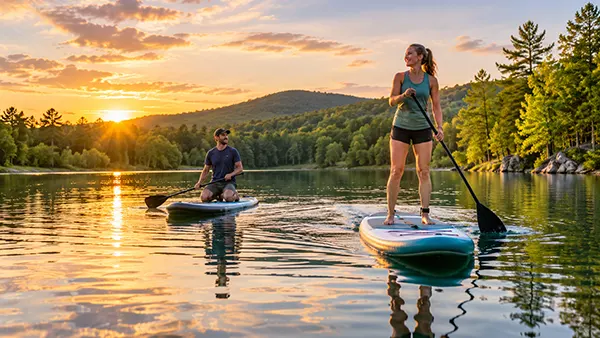
7. Book a one-hour paddleboard, kayak or canoe session close to home. Owning equipment is not essential if a local watersports centre or hire point provides short evening sessions. This can make paddling more realistic for someone who wants an occasional microadventure rather than another hobby requiring storage, transport and a large amount of kit. A calm lake, sheltered bay or managed stretch of water is usually a better choice for a weekday session than an exposed area with changing currents. Follow the operator’s rules, use the required buoyancy equipment and stay inside the permitted area. An organised hire session can also solve several practical problems at once because access, equipment and local guidance are available in the same place.
Water-based outings need a little more preparation than a walk or cycle ride, so they are best planned earlier in the day rather than chosen spontaneously at sunset. Check the current weather, water conditions, opening hours and access rules before travelling. For coastal trips, tide information is essential, and swimming should only take place where the location is considered suitable. Bring a towel, dry clothes and something warm enough for the journey home. If conditions have changed, replace the water activity with a shoreline or riverside walk instead. A successful microadventure depends on having an enjoyable evening, not on completing the original plan at any cost. Keeping a simple alternative in mind makes it much easier to change course without wasting the evening.
Add a purpose to the route
8. Turn a walk into a local navigation challenge. Geocaching is one option, but the same principle works without following a formal game. Choose five or six points on a map that you have never visited on foot and connect them into one route. They might include a footbridge, public artwork, unusual street, historic building, small nature reserve or viewpoint. The objective gives the walk momentum and often leads through parts of a neighbourhood that are easy to overlook during daily travel. Keep all checkpoints on legal public routes and avoid entering private land simply because a map suggests a shorter line between two points. For a more physical version, cover the route at a brisk walking pace or alternate short running sections with walking.
9. Take a woodland or country-park walk as daylight fades. A route that feels ordinary during the afternoon can feel completely different around dusk, when sounds become more noticeable and familiar landmarks look less obvious. Choose somewhere you already know for the first attempt and confirm that evening access is permitted, since some parks, nature reserves and car parks close at set times. Carry a proper torch or head torch rather than relying entirely on a phone, and keep the route shorter than you would in daylight. A charged phone, suitable footwear and an extra layer are sensible additions. In areas with weak mobile reception, downloading the route before leaving reduces dependence on a signal.
Night and dusk outings also work better when the surroundings are treated with care. Stay on established paths where required, follow local signs and avoid disturbing wildlife or people living near the route. Take litter home and keep noise low in residential or protected areas. When livestock is present, follow the signs and local countryside guidance rather than improvising a shortcut through a field. The aim is to add atmosphere to a short evening outing without creating unnecessary risk or damaging the place being visited. A familiar two-kilometre woodland loop completed carefully after sunset can feel more adventurous than a much longer daytime walk simply because the conditions require greater attention.
Choose one skill-based activity and keep it close to home
10. Use an evening for a short climbing or bouldering session. A local climbing wall is one of the easiest options because weather and fading daylight are no longer major obstacles, and many centres offer evening access. Where outdoor climbing is legal, established and appropriate to your ability, a nearby bouldering area can provide a more outdoor-focused version, but local restrictions, conditions and safe access need to be checked first. For someone without previous climbing knowledge, an introductory session at a staffed climbing centre is more sensible than trying to learn independently outdoors. The attraction of this microadventure is not the height or difficulty. It is the concentration required: after a working day spent thinking about emails, deadlines or meetings, solving a sequence of movements demands attention in a completely different way.
The same principle explains why skill-based outings often feel longer and more memorable than their actual duration. A 75-minute activity with a clear task can separate work from the rest of the evening more effectively than several hours spent at home without a change of pace. Climbing also demonstrates an important rule for all ten ideas: use what already exists nearby. The purpose is not to imitate a distant mountain trip on a Tuesday night. It is to identify local terrain, routes and activities that can provide a compact sense of movement, challenge and novelty. Someone living near water will have different options from someone surrounded by parks, hills or dense city streets, so the most practical collection of microadventures will always be personal.
Season also changes which options make sense. Long summer evenings are well suited to cycling, viewpoints, paddling and extended walks. During darker months, shorter illuminated routes, climbing centres and well-known local paths become easier to fit around work. Wind, heavy rain, high temperatures, ice and poor visibility can all justify changing an outdoor plan. Keeping several alternatives removes the pressure to force one activity into unsuitable conditions. An evening outdoors should not become a test of stubbornness. A shortened route completed safely is still a worthwhile microadventure, and sometimes the best decision is to replace an exposed route with a sheltered or indoor activity.
How to make after-work microadventures realistic
The easiest way to keep doing these outings is to reduce the number of decisions required after work. Choose a regular evening but keep the activity flexible. Prepare three or four routes within easy reach of home, note their approximate duration and know which ones still work when daylight or weather is limited. On the chosen day, check conditions and select the most suitable option. Starting within 30 minutes of finishing work is often more effective than going home, settling into the evening and hoping motivation returns later. For people who commute, the microadventure can begin from the workplace itself: walking part of the journey home, cycling a longer route or getting off public transport earlier can turn necessary travel into active leisure.
A small ready-to-go kit also removes excuses. The exact contents depend on the activity, but a bottle of water, weather-appropriate layer, compact snack, charged phone and simple first-aid items cover many ordinary outings. Add bike lights for cycling and a head torch for routes that may continue after sunset. For swimming, keep a towel and dry clothes together in one bag. Equipment should remain proportionate to the plan; buying specialist gear for every possible activity works against the simplicity that makes microadventures useful. Good footwear, appropriate clothing and reliable lighting matter more than filling a cupboard with equipment that rarely leaves the house.
Most importantly, measure an after-work microadventure by the change it creates in the evening rather than by distance, speed or difficulty. A five-kilometre sunset walk can be enough. So can a short paddle, a carefully planned swim, a cycle circuit through unfamiliar streets or an hour of climbing. Repeating the same idea in different seasons also keeps it interesting: a July viewpoint walk and a crisp November evening on the same route can feel like separate outings. Weekend travel still has its place, but it does not have to carry the full responsibility for providing active time outdoors. With ten practical options close to home, an ordinary weekday can contain a small adventure and still end in your own bed.